
Stone Side Tables: Choose the Perfect Fit for Your Home with expert tips on materials, styles, sizes, care, and buying the right table.
A stone side table is not just for resting a coffee on, it can warm up a minimal room by adding texture, complement a space with hard edges or be the understated feature that gives the surrounds a sense of completeness.
I’ve always been drawn to furniture that seems to do a lot while trying not to appear to do anything, and stone tables do that much more gracefully. A plain travertine table next to a couch can conjure a sort of warm natural feel, while a more dramatic, veins-marbled surface can generate more glamour. And we have no lack of options.
Stone side tables are available in the United States in all of these stone varieties in a range of finishes, including natural travertine marble granite terrazzo concrete, sintered stone, MGO and stone-look composites, at all price points. For a Minimalist look, the difficult part is here is to know what you are actually buying.
A product page will often show the word ‘stone’ to indicate that a table’s surface is stone, but not that the table itself is made from one piece of natural stone. Yet, once clear on the nuances of material construction size style maintenance and cost, finding the perfect table is easy. The question is, why are these stone Side Tables so attractive?
Why Are Stone Side Tables So Appealing?
The attraction is not just in durability. Stone is also something that is transmittent, while not always. Its beauty is hard to achieve without the use of marble or stone, it can create subtle changes in surface, such as color vein texture and pattern, to make a piece have a unique value; rather than just be another commercial commodity. This is most of all effective in modern contemporary minimalist, organic-modern Scandinavian Japandi, and other design-led interiors.
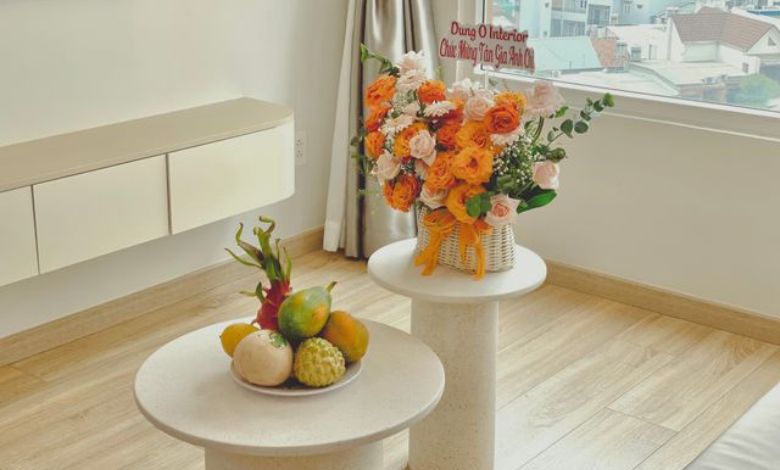
Today, U.S. furniture collections commonly use stone and travertine side tables in this type of environment. Contrast can be achieved with a stone side table as well. Place one in front of a plush linen sofa and suddenly the room appears more evenly balanced.
Combine light travertine with the warmth of a natural wooden table top and the room is transformed into a cozy, yet simple environment. That is, the table is doing its purpose but the stuff is doing some of the decorating.
Which stone is the most suitable for a side table?
No single winner here. The choice of what’s best is totally up to you, what looks you desire, how much upkeep you want to do, how much you’ll use the table and what kind of location you’re using the table in.
Travertine Side Tables
Travertine side tables are a mainly beautiful choice if you love neutrals, natural textures, and the organic modern look.
It is a type of limestone and is naturally porous; with holes or pores, a warm beige or ivory color and with naturally varying surface quality. this is what makes it unique.
It is also about care, quite a lot of travertine items appreciate adequate sealing and spills being mopped up fairly quickly, mainly spills involving materials that can react with calcareous stone. Care instruction for the specific table/finish should be consulted for its maintenance. Travertine works well when you are going for an informal relaxed sophisticated feel for the table.
Marble Side Tables
A marble side table simply cannot be overlooked. The vein itself may become a design element in its own right; another reason why marble is very effective in sophisticated/luxury environments. Different coloured marbles (white cream grey black green etc.) are able to evoke much diverse environments.
A critical point that you should keep in mind is that marble is not maintenance free. Marbles that are very rich in calcite are susceptible to damage from acids etching can occur and porosity as well as type of finish affects its tendency to stain.
Etching and staining are very different occurrences and so should be discussed independently in a care guide. Marble works in contexts where visual effect is important and you are prepared to put the effort in to look after it correctly.
Granite: An Excellent Option When Durability is a Priority
Granite is a strong and long lasts natural stone which can be a very practical choice for very high-use areas.
Besides the hardness, granite’s image is generally more visually strong compared to those of the light travertines, which is why granite can be a good option when you’re looking for a more distinct pattern or even a darker stone effect.
In fact, stone durability is not uniform. Product performance will change from one to another based on factors like the particular material finish construction and environment.
Sintered Stone: A Great Choice for a Consistent, Modern Aesthetic
Sintered stone is an engineered surface material resulting from a controlled high-pres-sure and high-temperature application to a mix of mineral-based powders.
The first and main benefit here is Really sintered surfaces are all uniform. If you dream of a stone-like beauty without a lot of random patterns characteristic of a natural stone quarried, you should look at sintered.
They suit modern spaces where smooth and consistent surfaces and finishes are part of the overall style.
Concrete & Terrazzo: Perfect for Contemporary/Architectural Houses
Incorporating a concrete piece into the furniture brings a minimalistic and industrial mood, whereas the presence of a terrazzo item adds a decorative effect due to its unique aggregate structure.
You don’t have to worry that these materials will look very cold. Both materials, when placed in a well-designed setting, can blend very well with a soft fabric, a piece of furniture made of wood, a rug, and even lighting.
Natural Stone vs. Stone-Look Side Tables
Perhaps this is the most critical distinction you must make before purchasing: A product described as a “stone side table” may feature:
- Solid natural stone
- a solid natural-stone tabletop
- Stone veneer
- Machine-made or sintered stone
- MGO
- Fiberglass
- Concrete
- Imitation marble and imitation travertine: Existing U.S.
retail listings cover products that fit these descriptions, and because of this, just from the title, you will have to guess at the nature of your purchase.
Before purchasing the material, ensure the material specification actually reads the materials being used. Is it real natural stone? Only the tabletop stone then? The stone; a veneer or finish? What is the backing material? What does the table weigh?
Can the exact type of stone or engineered stone be determined from the manufacturer?
All this is important because the construction of an instrument has effects on how the instrument looks feels its maintainability durability cost, and the logistics of shipping.
If you are only after real natural stone, then ensure the item has a specific name indicating this such as “Turkish travertine” or “natural marble” rather than a vague reference like “stone finish”.
What shape do you go for?
The style of the stone side table can contribute to the atmosphere of the room.
Round Tables
Round tables are great for use next to sofas or armchairs.
Their shape can help balance a room filled with straight-lined furniture and they can be more easily moved around in restricted areas.
Cube/Square Shape
A cube/square shape, looks quite structured and architectual. Natural fit for a minimalist, modern space.
Pedestal Stone Side Tables
Pedestal tables work best if you want the furniture to be part of the decor. An uncomplicated base, of cylindrical shape or sculpture form, can be used effectively as a focal point.
This is where stone gets fascinating, an irregular shaped or sculpted table may almost be considered a miniature piece of art. The shape may be all that is required to give life and character to a more simple space.
How to Choose the Right Size Stone Side Table
This is one of those decisions that seems trivial right up to the point that you screw it up. A table might appear ideal on a product page and yet be uncomfortable against your sofa if it is much too high, too deep or too big for the available floor space.
Imagine buying shoes. Looking at the size on the box doesn’t help, it need to be the right size to fit into your shoes.
Check the Height
Ideally, for practical purposes, a side table should be roughly the same height as, or a little lower than, the arm of the sofa or chair next to it. A target of about 2 inches below arm height, is often suggested.
Check the Width
Make the tabletop big if you really require it to be used in the way you envisage without it being too overpowering for the seating area. A small surface may be ideal for a drink and the phone. A lamp, books and ornaments need a larger area.
Check the Depth
Depth is important as well. Be careful not to choose a table that extends too far into a walkway, making the room cramped, even though the table is quite attractive.Before buying, measure the free floor area and consider the paths around it.
Contexts for utilizing a Stone Side Table
An advantage of this category of furniture is its versatility. Simply place it next to an armchair, sectional or pouf for holding drinks books, lamps, remotes or decorative items.
Bedroom
Since the diameter of one stone table is larger, there is also the possibility of using it as a small bedside table or nightstand in simple and minimalist bedroom.
Reading Nook
A small round table near a lounge chair just suitable for a book, mug or a tiny table lamp.
Entryway
A sculptural form can make a bold statement in a sizable entry if space allows for easy movement around it.
Outdoor Areas
Some products are rated and intended for use inside and outside. Others are not.
Make sure you check that a table is real stone, not just manufactured to look like stone, before is used outside. suitability outdoor depends on the type of substance surface way it is constructed circumstances temperature and specifications of the producer. in colder climates the Freeze/thaw circumstances may be a big part.
What is the Cost of a Stone Side Table?
Stone side tables come with a much bigger range of prices that surprises you. On U.S. listing sites, stone and stone-look side tables starting at just a few hundred are listed, while top-tier natural-stones products can cost close to or in excess of $1,000.
In fact, for you to be able to do practical shopping for stone side tables, here is the approximate way you can divide up the market:
- Budget-friendly price range: below approximately $200
- Moderate price range: around $200 – $500
- High-tier price range: around $500 – $1,000
- Luxurious or handcrafted pieces: above $1,000
The price categories above are not formal from the industry but are rather the guidelines you can reference when you go for shopping for a stone side table.
Several factors like the type of material (natural or synthetic), table size, type of construction, quality of craftsmanship at the time of production, type of retail store (online/virtual or a store) where purchase happens – brand, transportation, and customizations may affect the total price of the product at the end.
Also, this fact should not be forgotten: a more expensive table is by no means a better one. Check out the real material of the surface, type of construction, table dimensions, finish of the tabletop, and maintenance of the table before you buy one to make a decision that serves you best.
Do Stone Side Tables weight Much?
Usually yes but that depends on what the table is made of. Natural stone side tables tend to weigh a lot because the surface is made entirely of stone and that makes them quite heavy. Then again, if it is a stone veneer, a lighter, or a stone look imitation, it would be quite easier for an individual to carry it.
The weight factor does not just have an impact on carrying or moving the table. Also, it affects what comes next:
- Distribution: a heavy object may cause damage to the floor if it falls.
- Carrying the table: the stairs may be an issue.
- Changing around the table positions
- Floor damage
- Assembling and putting the table in the desired position.
Why does natural stone not look like the photo on the website? Because it’s natural differences will be apparent in tone vein pore size, texture and pattern from piece to piece.
Whether these differences are slight or pronounced depends on the product concerned. It would not necessarily be regarded as a flaw in the system. It is the biggest of the reasons that so many customers pick natural stone in the first place.
You aren’t buying a truly smooth, perfectly regular surface. You are buying a material that has some character. Consider using composite stone or man made stone if a more uniform look is desired.
What’s the best way to clean and care for a stone side table?
It is difficult to have a general rule of cleaning stones as there is no standard one for all. Travertines marbles granite concrete sintered surfaces, and stone-look materials require varying levels of maintenance.
Clean the floor with the appropriate cleaner recommended for the material used. Do not presume that standard acidic household cleaners are safe for any stone. Promptly clean up any spills.
Where necessary use coasters and trivets. Observe the manufacturer’s sealing instructions. Some natural stones will have some stain resistance when a sealer is applied, but stone cannot be made stain-proof and sealer will not prevent acid etching on acid sensitive stone. If there is confusion, rely on the care information from the manufacturer.
Choosing a bedside table for your home.
If you’re looking at dozens of attractive choices, and saying “Right then, but which of these is actually for me?”, narrow down the selection by first identifying your goals.
Use travertine if you’re aiming for warm tones, organic feel, and a sense of natural movement. Choose marble for a bold vein and a sense of grandeur. Select granite if durability and more pronounced natural patterns are very important factors.
Select sintered stone, if you are seeking to create a contemporary and defined look with manufactured regularity. Opt for a stone effect table if the aesthetic appearance is more of an issue than actually owning a real stone item, or if you want to look at perhaps lighter or more cost effective designs.
Next come to shape. Even a little round table can look stunning in a small space. Pedestal tables can add a sculptural quality. Cube tables provide a contemporary geometric focus. Last but not least, verify the practical aspect: height size weight materials cleaning, shipping and returns.
What should I consider before purchasing a stone side table?
Check this items before you click the “Add to Cart” button :
- Material: Is the stone a natural one or engineered, or a stone pattern?
- Construction: Is it solid veneered layered, or just a finished product?
- Dimensions: Will it fit the room where it will be used?
- Height: Is it compatible with the adjacent sofa, chair, or bed?
- Weight: Can you lift it or be able to have it delivered safely?
- Finish: Is the surface polished honed matte, textured, or sealed?
- Maintenance: Does cleaning and/or sealing require a certain way only?
- Location: Is it designed to be kept inside, put outside, or both?
- Variation: able to be different from the one shown?
- Shipping: What are the delivery options, such as standard delivery, threshold delivery, room-of-choice delivery, or white-glove delivery, available from the retailer?
- Returns: What will happen if the product arrives damaged or different looking from what you ordered?
Although answering all these questions could cost you some extra minutes, they will definitely save you a lot of headaches, regrets, or frustrations later on.
Which Stone Side Table do I need to Buy?
This is probably the easiest way to figure out for organic-modern interiors: Choose travertine.
- For classic luxury: Go for marble.
- For durability-focused spaces: picking granite is a good choice.
- For a consistent contemporary finish choice: sintered stone is your friend.
- For a lighter or potentially more budget-conscious choice: stone-look is also a great option.
Beyond the stone type, you’ll also be picking out a furniture item so make sure the height and the size are suitable for you. Also, check out how you’ll be carrying it home as well as the level of maintenance after its delivery. Of course, you’ll also have to look at how it fits into the look of your room.
FAQs
Q. Durability if they are stone side tables.
Natural stone can be very durable, but results will depend on the type of stone, its finish, how it has been constructed and the environment it is in. Machined surfaces of granite marble travertine, concrete and manufactured stone should not be considered the same.
Q. Redesigning is travertine good for side table?
Yes. Travertine is a good option for a side table if an individual appreciates natural texture and warm neutral tones. Due to its porosity, proper maintenance and sometimes sealing is required.
Q. Which is more preferable marble or travertine as a side table?
Both are equally good; one might be more appropriate for a more formal, luxury room, with the other being more casual and appearing more natural. Ultimately it depends what look you want and how much work you’re willing to do.
Q. How much do stone side tables weigh?
Yes, they can. Stone-top tables tend to be heavier than lightweight engineered or wood tables, but the weight of a natural-stone table will depend heavily on the size and construction.
Q. Can you use stone side tables outside?
Possible for some, not all. Make sure the product has an outdoor rating, and take into account the product material finish construction and climate before leaving outside.
Q. Are all natural stone tables the same color and pattern?
Yes. The color veining texture and pattern of natural stone can all change. Those varieties are average in many natural-stone product.
Q. To be exact: should stone side tables be sealed?
While some stones are sealed to help prevent staining others may not need to be sealed. While sealing will help resist staining it does not mean that the stone is stain-proof or that it cannot be etched by acids.
Key Takings
The stone side table that is best is not the largest, the heaviest, or the most costly. It is the one that works for your space. Begin with the appearance you are after.
Then decide on the fabric. Next, determine the size height structure weight upkeep, and cost. That the order of the unique Markov Chain and the unique partner Markov Chain matters. Perhaps, a gorgeous marble table is too fragile for your daily usage.5 Olivian-style pedestal table made from a large piece of travertine could be ideal in one home and hopelessly impractical in another.
0160A table that looks like stone but isn’t may make more sense if you would like the look but not the weight or upkeep of a natural stone. 0160 In the final analysis, if you want to buy a stone side table is not really about the “best” table but about an ideal balance of material form proportion, usability, and budget suitable for your living environment. And then, all of a sudden, when you think of them that way, it is a whole lot easier.
Additional Resources
- Natural Stone Institute: A leading industry authority covering natural stone selection, care, standards, maintenance, and performance.
- Travertine Side Tables: Current product examples showing the different materials and constructions sold as stone or travertine side tables.
- Wayfair, End Table Height Guide: Practical guidance on choosing the right side-table height and proportions for sofas and chairs.