
How to Get Pee Smell Out of a Couch: Fresh & Dried Urine with easy cleaning tips to remove stubborn odors and freshen your sofa.
Pee smells on the couch are among the most stubborn in a home and often very aggravating. It may be that your puppy soiled the couch while you were out, or perhaps the cat made the couch their throne instead of the litter box. Or maybe you have kids, and “oops” happened before the parents had even a glance at the room. In any case, DIY,
you’d want to be told first the answer to how to get rid of the pee smell of the couch permanently.
In short, your best bet is to eliminate the odor’s source first. In some cases, such as a dog mess (liquid), your task might seem daunting at first. A really bad accident or one that is not properly cleaned after the initial mess could result in the sofa requiring professional deep cleaning, which is quite an expensive service.
The tendency is to get the strongest cleaner you can find and get the job done. Don’t. Step back and get the training, identify the upholstery, get rid of as much urine as you can and then treat.
Here’s how to do it.
Quick Answer: How Do You Get Pee Smell Out of a Couch?
If you have that distinctive smell of the urinal in your couch, the first thing to do is just blot the spot so that you get rid of any spilled urine as much as you can before actually rubbing it. Look for the fabric care code written on the couch upholstery and use matching cleaner for the fabric only. One kind of fabric, and an enzymatic urine cleaner, can work really well to neutralize urine smell instead of just masking it.
Wait the treatment to act as the directions say, then blot or dry the treated area with extracting technique, and allow the whole thing to dry completely. If the smell is back after drying, probably the urine went all the way through the cushion foam or padding and you will definitely need to carry out some deeper cleaning. Always read and follow the manufacturer’s instructions before using any liquid-based cleaner because the use of the wrong one may ruin the fabric. Upholstery codes like W S WS, and X refer to various cleaning methods and because of this, using one not suitable could result in damage to the fabric.
What You’ll Need
Gather your supplies before you start:
- Clean white towels or paper towels
- A vacuum cleaner
- An upholstery-safe urine or enzyme cleaner
- Baking soda, if appropriate for your upholstery
- A soft brush, if recommended for the fabric
- A spray bottle, if required by your chosen cleaning method
- Disposable gloves
The fact of the matter is, you do not require a whole range of commercial cleaning products. It may sound tempting, yet having a dozen products does not guarantee superior clean.
The main thing is to spot clean as much of the urine as you can get from the carpet, make sure you follow up with a good pet odor eliminator treatment and fully dry out the carpet.
Step 1: Blot the Pee as Quickly as Possible
If you have fresh urine, you are in the right position to stop an embarrassing incident from turning into a serious bad odor issue.
To start, hold only the clean part of the towel down firmly onto the damp section. Keep repeating this action using fresh areas of your cloth, only stopping when your piece of cloth is coming out fairly dry.
Don’t scrub.
Scrubbing the spot may cause the urine to spread more than it was and also get further embedded into the upholstery.
A couch can also behave like a sponge. You do not want the liquid to go deeper into the sponge by working it out; instead you should do everything you can to pull the liquid out.
If the cushion is equipped with a removable cover, the best solution you probably have right here is taking the cover off and washing it per the manufacturer’s instructions.
Quick action is the key to your success. Fresh urine is generally easier to address than urine that has been sitting and drying inside the fabric and padding. (Angi)
Step 2: Check Your Couch’s Cleaning Code
Before you reach for vinegar, water, dish soap, or an upholstery cleaner, look for the small tag on your couch.
You can often find it:
- Under a removable seat cushion
- Along the underside of the couch
- On the frame
- Sewn into a seam
- In the original furniture paperwork
You may see W, S, WS, W/S, SW, or X.
Here’s what they generally mean:
| Code | Meaning |
| W | Water-based cleaning is permitted |
| S | Use an appropriate solvent-based method; avoid water |
| WS/W-S/SW | Water- or solvent-based cleaning may be used |
| X | Vacuum or light brushing only; don’t use liquid cleaners |
These codes matter. If one cleans incorrectly, upholstery may deteriorate. For instance, water on an S-coded fabric, can result in a number of problems like watermarks, shrinkage, or color bleeding. (My Blog)
Don’t guess that water is safe if there is no cleaning code visible. If, for example, you have been gifted a lovely couch that is an antique or a precious one of a kind piece, you would rather get in touch with professionals to get a second opinion.
Step 3: Treat the Urine-Stained Area
Address the spot with the corresponding treatment that is suitable for your couch’s fabric.
If the fabric is water safe, an enzymatic cleaner designed to be exact for removing urine might be just what the doctor ordered to get rid of the stains. Be sure to follow all the instructions carefully including details about the quantity of product to be used and the time it should be left on the fabric.
The simple fact is that the elimination of the odor of urine isn’t equal to making the couch smell “fresh” again. A pleasant smell can just cover the odor for a while but does not eliminate the pollution at the root.
This principle is of major significance in case of the odor of pet urine for which the fragrance of the odor may be stubborn and long-lasting.
Use the cleaner on the area in question according to the instructions and do not over-wet the couch.
Step 4: Give the Cleaner Time to Work
This is often one of the steps that people rush. Straightaway you might want to use spray to clean it and wipe it off but the cleaning product is made for cleaning it in this way.
A great thing is that the cleaning product is made in such a way that it works. So, stick to the dwell, contact, or recommendation times the company has set out.
The objective isn’t simply to make the fabric wet.
It’s to give the treatment enough opportunity to work on the contamination.
Step 5: Blot or Extract the Area
After the recommended time for treatment has elapsed, the afflicted area may be wiped dry, the pat drying way, or alternatively the upholstery extraction method may be resorted to, but of course, only if the particular type of fabric you have and the instructions laid down for its cleaning permit such use.
Do not let go and start scrubbing.
In general, delicate cleaning is recommended over violent washing that treats your couch as if you’re removing graffiti from a sidewalk.
In case you resort to an extraction machine, make sure to heed all the operating and upholstery manufacturer guidelines carefully and refrain from making the furniture excessively wet.
Step 6: Let the Couch Dry Completely
This portion is of huge importance.
Help the sofa dry out a little by using fans and opening doors windows and even a couple of fresh air ducts if there are any. Also, if at all possible, prevent people and animals from entering and disturbing the area during the drying time.
Do NOT place anything over the sofa or return the cushions to an enclosed, damp place.
In addition, do not smell or evaluate the final result by odor while the material is still a little humid.
Your job is to be patient until the entire drying cycle is finished.
You will know for sure after that whether the smell of urine is totally gone or not.
How to Get Dried Pee Smell Out of a Couch
Fresh urine is one thing. Dried urine is another story.
Do not panic if you only found the accident hours or even days after it happened. Treatment is still possible, though you’ll need a fair amount of patience for the process.
Begin by tracking down the impacted spot. For pet accidents when you are not certain where it occurred, check for visible staining or use a suitable method to identify possible contaminated areas.
Then:
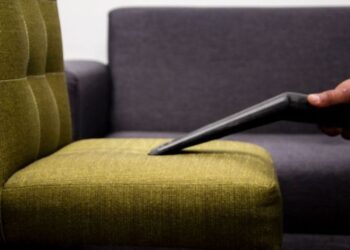
- Vacuum loose dirt from the upholstery.
- Check the upholstery cleaning code.
- Test your chosen cleaner on an inconspicuous area.
- Apply an appropriate urine-targeting cleaner according to its instructions.
- Allow it to work for the recommended time.
- Blot or extract as appropriate.
- Allow the couch to dry completely.
- Check the odor again once dry.
- Repeat the treatment if the product instructions allow it and the odor remains.
Old urine can be more difficult because the contamination may have moved below the visible surface.
And that brings us to one of the biggest reasons a couch can smell fine for a few hours and then suddenly stink again.
What If the Pee Soaked Into the Couch Cushion?
This is where many DIY cleaning attempts fall short.
You clean the fabric. The couch smells better. You celebrate.
Then the next day, you sit down, and there it is again.
If the situation you describe happens, that indicates the urine has probably already penetrated into the cushion or padding beneath.
Simply getting rid of the visible stuff on the outside of the fabric will only rarely solve the issue at hand: for example, urine smell, which lingers on, can cause frustration. The stained area may have faded completely, whereas in fact the very cause of the bad smell could still be hiding in the depths of the cushion without being cleaned properly.
If your cushions are covered with removable fabric coverings you must first read the manual carefully before you take down the coverings or clean them in any possible way. A cleaning technique for inside foam and a drying stage might be the same.
If a urine spillage has soaked the foam to the last layer that probably is the case when a mere DIY soaking won’t suffice. So, in that case, a professional cleaner is probably the right move.
How to Get Dog Pee Smell Out of a Couch
Dog accidents are common, especially with puppies, older dogs, or dogs adjusting to a new environment.
The basic process is the same:
Blot → check the fabric → treat appropriately → allow contact time → remove excess moisture → dry completely.
Don’t limit your treatment to the exact center of the visible spot. Urine can spread more than the area it was visible in the first place.
In case the dog keeps coming back to the same couch spot, it doesn’t necessarily mean that the couch is the best place to lie.
The smell may also be one of the possible causes of the dog’s behavior; that means, properly dealing with the initial issue is crucial.
How to Get Cat Pee Smell Out of a Couch
Cat urine can be particularly challenging because the odor can remain strong even after the visible stain has disappeared.
If your cat has urinated on the couch, treat the area as soon as possible and look beyond the obvious surface stain.
If the smell keeps coming back, investigate whether urine has reached the cushion foam, seams, or areas underneath the cushion.
And if your cat repeatedly urinates outside the litter box, cleaning the couch is only part of the solution. The underlying behavior should also be addressed.
How to Remove Pee Smell From Different Couch Materials
Not every couch should be cleaned the same way.
Fabric couch
Check the cleaning code and use a compatible upholstery cleaner. Water-safe fabrics may allow water-based treatment, while other fabrics require different methods.
Microfiber couch
Microfiber can vary, so don’t assume that every microfiber couch can be treated identically. Check the manufacturer’s instructions before applying liquid.
Leather couch
Don’t saturate leather with water or upholstery cleaners designed for fabric. Use products specifically intended for the leather type and follow the manufacturer’s care instructions.
Removable cushions
Treat the cover and cushion separately when appropriate. Follow the care label rather than automatically putting the cover into the washing machine.
Foam cushions
Be especially careful with moisture. The outside can feel dry while the interior remains damp, so thorough drying is essential.
Can You Use Vinegar to Get Pee Smell Out of a Couch?
Vinegar is an old household remedy to clean different surfaces around the house, including your couch.
Yet, you should not consider the use of vinegar as a solution for all couch types.
It all really comes down to whether the furniture’s covering (whether that’s fabric or leather) is sensitive; what the fabric producer’s guide recommends, and also the type of stain that is involved. Put another way, it’s not acceptable to assume just because you have used vinegar for another cleaning around the home that you can now go ahead and spray it in abundance on the couch.
Also, you ought to be completely aware that the combination of vinegar and other common household cleaners can produce hazardous situations, so such combination should definitely be avoided.
Here, the cleaning instruction provided by the brand would be your main reference when it comes to cleaning the fabric covered furniture.
Does Baking Soda Remove Pee Smell From a Couch?
Baking soda can neutralize unpleasant smells in a home environment if it is applied on the right kind of materials, which is why it still features among the top deodorizers at home.
But, there is a significant difference to consider:
Neutralizing smells is not the same as ridding the place of the source of the smell.
Should the urine have fully penetrated the foam of the cushion, applying the baking soda in powder form over the surface area will not simply conjure away everything that is hidden beneath.
One can see baking soda as a potentially helpful assistant step, not a complete answer.
Why Does My Couch Still Smell Like Pee After Cleaning?
If you’ve cleaned the couch and the smell is still there, don’t immediately assume you need a stronger fragrance spray.
There are several possible reasons.
The urine reached the cushion foam
This is one of the biggest possibilities.
The contamination wasn’t completely removed
Surface wiping may not have reached everything.
The wrong cleaning method was used
The product may not have been appropriate for the upholstery or the type of contamination.
The couch is still damp
Odors can be more noticeable while upholstery is wet.
There’s another contaminated area
This is particularly common with pets. You may have treated one spot while another remains.
If the odor repeatedly returns after the couch has completely dried, consider deeper cleaning or professional upholstery treatment.
Common Mistakes to Avoid
Being extremely motivated to completely remove a urine smell may lead you to take the wrong measures.
Here are some things you absolutely must not do:
- Don’t forcefully scrub urine with water straight away.
- Before you soak the furniture in a cleaner you need to make sure that it’s water safe.
- You shouldn’t neglect to check out the cleaning code if the fabric has one.
- Using the same product that you’ve used on an older couch doesn’t mean it’ll be successful with your new couch.
- It’s a bad idea to put a cover over a still damp cushion.
- Just masking the odors with air freshener isn’t enough to be a fix.
- Trying to get the foam soaked with cleaner over and over again in the case you aren’t able to dry it properly, isn’t a good idea.
- Make sure never to use different cleaning chemicals together.
The strongest-smelling cleaner isn’t necessarily the best cleaner.
The right method for the right upholstery is much more important.
When Should You Call a Professional?
Sometimes DIY cleaning is perfectly reasonable.
Other times, it’s better to stop experimenting.
Consider professional upholstery cleaning if:
- The urine has deeply soaked into the cushions.
- The smell keeps returning after multiple appropriate treatments.
- The couch is expensive or delicate.
- The upholstery has an X cleaning code.
- You can’t determine what type of fabric you have.
- The contamination is extensive.
- You can’t properly dry the cushion after cleaning.
If your couch is valuable, a professional treatment can also be cheaper than accidentally damaging the upholstery with an unsuitable DIY method.
How to Prevent Pee Smell From Coming Back
After winning the battle is the very last thing anyone wishes is an encore.
If you are faced with pet-related accidents, clean them up promptly. Use instructions on the washable labels when you can for washing out the washable covers and make sure to notice those areas where the accidents keep recurring.
As for the animals, prevention will also consist of understanding the reason why the accidents happened and resolving it.
And if you have young children, using furniture with a cover or washable fabrics will reduce the stress caused by accidents much sooner.
Just believe me, anything that helps you deal with the next cleaning-up session much easier is definitely worth your time.
Frequently Asked Questions
What is the best way to get pee smell out of a couch?
At first dab, absorb the greatest amount possible of the urine. Then inspect the upholstery cleaning code to identify a urine-orientated cleaner. After following directions, make sure to wipe away residue, and leave the lounge to air it completely dry.
How do I get old urine smell out of a couch?
Treat the area with an upholstery-safe urine cleaner appropriate for the couch’s cleaning code. Old odors may require repeated treatment or deeper cleaning if the urine has reached the cushion foam.
How do I get dog pee smell out of a couch?
Blot fresh urine immediately, check the upholstery instructions, and use an appropriate urine-targeting cleaner. If the smell persists, check whether urine has penetrated the cushion or padding.
How do I get cat pee smell out of a couch?
Treat the affected area promptly with a suitable urine cleaner and investigate the cushion, seams, and surrounding areas if the odor persists. Cat urine can be particularly persistent, so surface deodorizing alone may not be enough.
Does baking soda get rid of the pee smell?
Baking soda can help deodorize some suitable upholstery, but it may not remove the underlying source of a urine odor, especially if urine has penetrated into cushion foam.
Does vinegar remove pee smell from a couch?
Vinegar is sometimes used as a household deodorizer, but it isn’t appropriate for every upholstery material. Always check the couch manufacturer’s cleaning instructions before using it.
Why does my couch smell like pee again after cleaning?
The most likely explanations are that urine remains in the cushion or padding, the original contamination wasn’t completely treated, another area was missed, or the couch hasn’t fully dried.
Can urine smell be removed from couch foam?
It can sometimes be treated, but deeply contaminated foam is more difficult to clean than surface upholstery. The appropriate approach depends on the cushion construction, cleaning instructions, severity of contamination, and ability to dry the foam thoroughly.
Final Thoughts
- Getting pee smell out of a couch can feel like one of those household jobs that should take five minutes but somehow turns into an entire Saturday afternoon.
- I’ve found that the biggest mistake is focusing on the smell instead of the source.
- A fragrance spray may make the couch smell like flowers for an afternoon.
- Baking soda may help with surface odors.
- But if urine has made its way into the cushion, the problem is still sitting there underneath you, literally.
- The better approach is simple:
- Blot quickly.
- Check the upholstery code.
- Treat the contamination appropriately.
- Don’t over-wet the couch.
- Let everything dry completely.
- Then reassess the odor.
- If the smell disappears, fantastic.
- Couch rescued.
- If it comes back, don’t keep piling on deodorizer.
- That’s your clue that the urine may have gone deeper than the surface and that you may need a more thorough treatment.
- And remember: your couch isn’t necessarily ruined just because it smells like pee today.
- With the right cleaning method and a little patience, there’s a very good chance you can get it smelling fresh again.
- This version is structured to capture the primary “how-to” intent while naturally covering the secondary searches around dried urine, pet urine, couch cushions, upholstery types, DIY solutions, persistent odors, and professional cleaning.
- The upholstery-code guidance is particularly important because current upholstery-care guidance consistently emphasizes checking the manufacturer’s W/S/WS/X code before applying a cleaning method. (My Blog)
Additional Resources
- IICRC — Urine Odors: Upholstery: Explains how urine penetrates upholstered furniture, why odors can persist, and when professional cleaning or cushion replacement may be necessary.
- Carpet and Rug Institute — Technical Bulletin: Pet Urine: Provides professional guidance on removing pet urine, controlling odors, using enzymatic treatments, and avoiding methods such as steam cleaning.
- University of Georgia Extension — Remove Stains From Urine: Covers human and animal urine stains and emphasizes checking fabric-care instructions and testing cleaning methods first.