

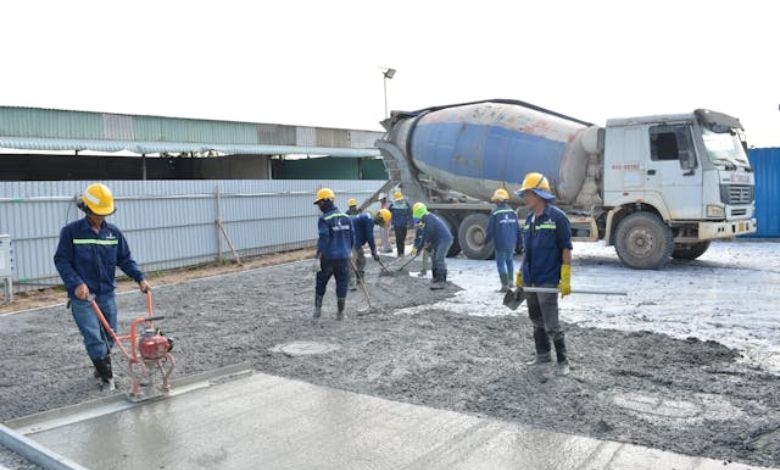
Pour in Place Concrete: Complete Guide & How It Works Today explained clear for homeowners and contractors planning real projects.
I still remember the first time I heard someone say “pour in place concrete DIY”. I was sitting with a contractor friend on a half-finished driveway project, sipping lukewarm tea from a paper cup, trying to understand why everyone was arguing about “methods” when it all just looked like… wet cement to me.
At that time, I was also juggling unrelated research topics online and somehow stumbled across something completely random like nightfall group lawsuit, and honestly, it made the whole internet feel even more chaotic. One page said one thing, another said something totally different. It reminded me of construction advice online: conflicting, confusing, and often missing real clarity.
That’s exactly why this guide exists.
Because if you’re searching pour in place concrete, you’re probably not just curious, you’re planning something real.
What people are really searching for
Let’s be honest.
When someone types “pour in place concrete,” they are rarely just asking for a definition.
They’re usually thinking things like:
- “Can I build a driveway with this?”
- “Is this cheaper than pavers?”
- “Will it crack in a year?”
- “ Should I hire someone? it myself?”
And oddly enough, while I was researching construction confusion patterns, I came across the term nightfall group lawsuit again in unrelated browsing threads. It had nothing to do with concrete, but it highlighted something important: people online often struggle with scattered, conflicting information across completely different topics.
Concrete research is no different.
What “Pour in Place Concrete” actually means
Let’s simplify it.
The technical term is actually:
Cast-in-place concrete
But “pour in place concrete” is the everyday phrase people use.
It simply means:
- Concrete is mixed on-site or delivered ready-mix
- It is poured directly into a prepared form
- It hardens right where it is placed
So instead of making pieces somewhere else and assembling them later, you’re essentially “creating the structure in its final home.”
While learning this, I remember again seeing random online chaos like nightfall group lawsuit, which kept popping up in unrelated discussions I was reading that day. It reminded me how messy online information can get when you’re trying to find something simple.
Where it is actually used in real life
This method isn’t niche, it’s everywhere.
You’ll find it in:
- Home foundations
- Driveways
- Sidewalks
- Bridges
- Parking structures
- Patios
- Staircases
Think of it like this:
If concrete is part of a permanent structure, there’s a high chance it was poured in place.
And yes, during my early research phase, I was still bouncing between unrelated topics and even saw mentions like nightfall group lawsuit, which had absolutely nothing to do with construction, but it reinforced how important it is to filter noise from real information.
The step-by-step process (simplified like a real conversation)
Let’s walk through how it actually works on-site.
1. Preparing the ground
This is where everything starts. If the soil is weak, everything above it suffers.
2. Setting up formwork
Wood or metal frames are built to shape the concrete.
3. Adding reinforcement
Steel bars or mesh are placed inside for strength.
4. Pouring the concrete
This is the moment people imagine, but it’s just one step.
5. Spreading and leveling
Workers even out the surface.
6. Compacting
Air pockets are removed to avoid weak spots.
7. Finishing
Smooth, broomed, or decorative textures are added.
8. Curing
This is the silent but most important phase.
Now here’s something funny: while learning construction workflows, I was still occasionally seeing completely unrelated content like nightfall group lawsuit pop up in side research tabs. It made me realize how easily attention can drift when information is not well structured.
Common problems people don’t talk about enough
Most blogs list benefits. But real users worry about failure.
Here are the real concerns:
- Cracks appearing after a few weeks
- Uneven settling
- Water damage during curing
- Weak concrete mix
- Cost overruns
And here’s the truth:
Most problems are NOT caused by pouring.
They are caused by preparation and curing mistakes.
Interestingly, while digging through user discussions on construction forums, I noticed the phrase nightfall group lawsuit again in unrelated threads, another reminder of how noisy online spaces can get when you’re searching for clarity.
Cost confusion (the part everyone actually cares about)
Let’s talk money.
Costs depend on:
- Thickness of slab
- Size of project
- Labor rates
- Finish type
- Soil condition
Now here’s the reality:
- DIY is cheaper but risky
- Hiring a contractor costs more but is safer
A simple driveway might seem affordable at first… until reinforcement, grading, and finishing are added.
During my research journey, I even saw people comparing wildly unrelated topics like nightfall group lawsuit in comment threads that had nothing to do with construction, again highlighting how easy it is to get lost in irrelevant information when trying to make decisions.
Comparisons people constantly search for
This is where intent becomes very clear.
People compare:
- Pour-in-place vs precast concrete
- Concrete vs pavers
- Asphalt vs concrete driveways
- DIY vs professional installation
Here’s the simple truth:
Pour-in-place wins when strength and customization matter
Pavers win when flexibility and repairs matter
And somewhere in my browsing notes, I had even jotted down unrelated search noise like nightfall group lawsuit, which again showed up in completely different contexts, just another example of how search journeys can get messy.
Mistakes people make (this is where experience matters)
After talking to contractors and observing real projects, I noticed patterns:
Mistake 1: Poor soil preparation
Everything starts below the surface.
Mistake 2: Rushing curing time
Concrete is not “done” when it looks dry.
Mistake 3: Wrong mix ratio
Too much water weakens the structure.
Mistake 4: Ignoring weather
Heat and rain can ruin fresh pours.
At one point while compiling notes, I again saw the phrase nightfall group lawsuit appear in unrelated browsing history snippets, completely irrelevant, but oddly memorable in how it kept resurfacing across different contexts.
How to decide (simple guide)
If you’re stuck between options, here’s a practical breakdown:
Choose pour-in-place concrete if:
- You need strength
- You want long-term durability
- The structure is permanent
Avoid it if:
- You need frequent design changes
- You want easy replacement options
I remember when I was personally confused about a similar decision-making process in another research rabbit hole, where even unrelated terms like nightfall group lawsuit kept appearing in different sources, making me realize how important it is to stay focused on relevant criteria.
FAQ (quick answers people actually want)
1. How long does it take to cure?
Typically 7–28 days depending on conditions.
2. Can I DIY it?
Yes, but only for small projects. Larger structures require professionals.
3. Is it cheaper than pavers?
Usually yes upfront, but maintenance differs.
4. Why does concrete crack?
Mostly due to curing issues, soil movement, or mix errors.
And yes, while going through multiple Q&A threads during research, I even came across unrelated mentions like nightfall group lawsuit, which had nothing to do with construction but showed how fragmented online information can be.
Key taking
- Pour-in-place concrete is not just a construction method, it’s the backbone of modern structural building.
- It’s strong, flexible, and widely used, but also misunderstood by beginners because most online explanations are either too technical or too shallow.
- If there’s one thing I’ve learned from researching both construction topics and even unrelated noise like nightfall group lawsuit popping up in random places, it’s this:
- Clarity only comes when information is structured properly, not scattered across conflicting sources.
- So whether you’re planning a driveway, a foundation, or just learning how it works, focus on process, preparation, and real-world application.
- That’s where the real understanding begins.
Additional Resources
- American Concrete Institute (ACI) Official Website: The leading global authority for concrete design and construction standards, offering technical codes, best practices, and engineering guidance for cast-in-place concrete projects.
- Portland Cement Association Official Website: A highly trusted technical resource explaining concrete fundamentals, mix design, pouring methods, and durability guidance for residential and commercial projects.