
Learn how to test a breaker safely with simple steps, tools, and tips to identify faulty breakers and protect your home.
If you’ve ever lost power. One room, our breaker, I traveled twice in a row, Or stared at your panel And thought,” Okay, now what?”, you’re in. The right place.
Many DIY enthusiasts search how to test a breaker because they want one thing: a clear, safe answer they can actually use.
This guide is for Circuit breakers designed for safety. Your home congestion, short circuits, And other electrical faults. They are not just wrestlers. They are safety devices. Hence the repeated stumbling, strange smells, heat, or a circuit Someone who dies suddenly should never be ignored.
The good news: This is what you don’t have to be. An electrician To understand the basics. All you warrant is a careful process, The right instrument, and a healthy respect for electricity.
Why Test Homeowners? A Breaker
Most people Do not test a breaker Just being curious. They Check it because something has already gone wrong.
You may need to test yourself. A breaker If:
- A breaker Keeps tripping
- A light, socket or appliance suddenly loses power.
- A recently installed switch is not working properly.
- The breaker Will not reset
- You have doubts a faulty breaker causes the issue
That’s just the way it is. This kind of troubleshooting guide will help. The goal: No clue. The goal: To confirm if the breaker is actually the problem.
Safety Is Coming First
Before you touch anything the panel, slow Wear conductor gloves and safety glasses. Preserve your hands and stand dry on a dry surface. And if you sense even a little. Uncomfortable opening Panel, stop and call. A licensed electrician. NFPA’s Household Electrical Safety The guidance emphasizes paying attention to warning signs such as burning smells, flashing lights, etc other electrical hazards.
Acknowledge the burn if you recognize it. Unusual heat, Feel corrosion, or smell something burning, don’t just sustain checking to’ witness what’s going on’. That is to articulate the point where the smart move must withdraw.
Tools You May Need
Most importantly, practical tools To test a breaker is:
- A digital multimeter
- A voltage tester
- Insulated gloves
- Safety glasses
- A flashlight
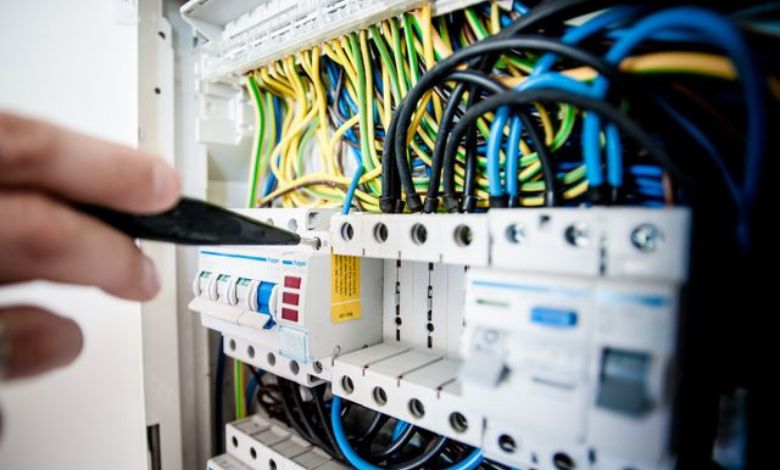
A multimeter is the best tool To read voltage and continuity. Fluke explains it. A multimeter can be used for measurement. AC voltage When it is properly set, with the black lead I COM And the red lead in V/Ω. A voltage tester Useful for a quick check. Breaker Finder can also help if you’re trying to match. An outlet or for a party the correct breaker.
How to Test a Breaker With a Multimeter
This is the most. Reliable way To check if a breaker Sends the power in the right way.
Step 1: Make the Circuit Safe
Turn off devices and disconnect. The circuit before the test. As a protector. Your equipment And reduces the chance of damage when you occupy If you are not comfortable opening the Panel, terminate here.
Step 2: Set the Meter to AC Voltage
Set your multimeter To AC voltage. In the U. S. Home, Standard branch circuits in general read about 120V, While larger circuits can read about 240V.
Housing services are often used. 120/240V split-phase power, Because of those numbers This is the scenario in testing. Home circuits.
Step 3: Test the Input Side
Check. The input terminal where the breaker connects to the panel. This tells you about the current when. The breaker. A breaker cannot function if the current does not reach it. The real issue.
Step 4: Test the Output Side
Obtain the test now. The output terminal is a feeder circuit.
Here is the simple logic:
- If the input is power and the output is power, the breaker Probably works.
- If the input However, the breaker indicates that there is no tension in the output. might be wrong.
- If the reading is inconsistent, something is inappropriate and further troubleshooting is required.
A breaker One that receives power but does not transmit it properly. A strong sign of failure.
Step 5: Read on the Result
To a typical home circuit:
- Approx 120V means generally the breaker do its job.
- But a standard branch circuit Approx 240V But that is expected larger circuits.
- 0V It can mean the breaker Is adverse, doesn’t get power properly, or is there another issue upstream.
A voltage test does not prove every part of the circuit Perfect, but it tells you too introductory.
How to Test a Breaker Without a Multimeter
Not everyone is the owner of a multimeter, And not everyone requires to use one inside a panel. He’s right. There are still a few useful checks you can do.
1. Reset the Test
Transform the breaker Change it off and then on again. If it trips again immediately, the breaker Could be defective, or the circuit Can be an overload or short circuit. It’s simple, but it happens often. The first clue is something deeper running.
2. Voltage Tests Check
Use a voltage tester To see if the current is where it should be. It’s not as detailed as that of a multimeter test, but it helps to confirm if the circuit is alive.
3. The Snifter Test
Yes, this one matters. Examine for heat, signs of burning, discoloration or a burning smell. They are all warning Signs on it the breaker may fail. NFPA home electrical safety guidance Has a particularly burning smell and other warning Signs that threaten to be removed seriously.
4. Exchange Test
If you have an identical compatible breaker And you understand what you’re doing, switching can assist confirm if the old breaker is bad.
If the circuit Working with the replacement breaker, Original one It was possible the problem. Use this method carefully only if you are absolutely sure. Replacement is the correct type and classification.
How to Test a Breaker With a Continuity Check
This is the part which is often misinterpreted, so let’s clarify it. A continuity test should be done on a de-energized, isolated breaker or circuit. Fluke’s continuity guidance explains that continuity testing is used to check whether a circuit path is completed and it should be done when there is no energy.
An open circuit Continuity will not appear, while a closed and complete circuit will. That is to say one important correction: No continuity is self-evident; a breaker is bad unless the breaker is tested correctly, safe condition.
Here is the right way to consider it:
- If the breaker is isolated and has no continuity when it should, the breaker could be wrong.
- If continuity exists where expected, it shows. The circuit path is complete.
- If the results are inconsistent, discontinue and check again. Your setup.
This is one Of the best reasons To use a multimeter Careful and not hasty.
A New Installation or Testing Replaced Breaker
A new breaker Still can cause problems If it is installed incorrectly or is not compatible. The circuit load.
Check. These things:
- The amperage rating Matches the circuit requirements.
- The terminals are safe.
- The breaker Fully seated and properly installed.
- The circuit actually works under load.
If the breaker will not be the power fluctuates, Or if you encounter heat or a burning smell, call. A professional electrician. From the manufacturer’s instructions Schneider Electric also pays attention to correct installation and proper breaker operation during testing.
Breakers With a TEST Button
Some breakers, Specifically AFCI and GFCI types, A built-in TEST button. To those breakers, to suppress the test button Should travel the breaker If it works as it should. Schneider Electric’s instructions explain the breaker When you are going to travel the test function is used.
It does one of the simplest built-in checks available. If you press the test button and nothing happens the breaker may be faulty or installed incorrectly.
Signs Breaker Is Bad
A breaker It is more likely to be invalid if:
- It is triggered immediately after reset.
- It will not reset.
- It doesn’t give up voltage output when input power exists.
- It fails continuity testing I the correct safe setup.
- It feels warm.
- It smells burning.
- It shows burn marks or discoloration.
- It continues to cause the same power problem Repeatedly.
One trip Not always means the breaker Bad sometimes a device But the circuit Is it overloaded or not? a short exists somewhere else. But repeated failure is a strong sign that the breaker Do you warrant attention?
What Should I Do?
Your circuit breaker is bad if it refers to testing. A bad breaker, Replace with it the correct type and amperage.
Before you change anything, check. Possible underlying Problems such as:
- Overloaded circuits
- Short circuits
- Loose wiring
- A damaged panel
- Multiple breakers I failed the same system
More than if one breaker acting, the issue can be greater than one part. But at that point, electrical inspection can be the safest and smartest. Next step.
When to Call a Professional Electrician
Ring a professional electrician If:
- The breaker Continues to stumble after replacement.
- You suspect cable damage.
- You witness burn marks, heat or corrosion.
- The breaker Will not reset.
- The power Fluctuations remain.
- You are not comfortable working inside the panel.
When there is no disadvantage in getting contribute. The problem is greater than a basic homeowner test. There are many disadvantages to coercion. A dangerous electrical repair.
Common Mistakes to Avoid
Many things breaker troubleshooting mistakes It happens because the population is in a hurry.
Avoid these:
- Without checking safety first.
- By using the wrong multimeter setting.
- Rotate with the modify switch a bad breaker.
- Overlook visible damage.
- To assume a new breaker Can’t be defective.
- To forget test Circuit, not only the switch.
A careful test gives you real answers. A run. One gives you more confusion.
Quick Recap: How to Test a Switch the Right Way
Here is the simple version:
- Generate the area safe.
- Survey. The breaker For heat, smell or damage.
- Use a multimeter If you have one.
- Look for proper voltage output.
- Use continuations only when the breaker is motionless and isolated.
- Try one reset test if you don’t have a multimeter.
- Use the breaker’s TEST button If he has one.
- Change it. The breaker If it obviously fails.
- Ring an electrician If the problem keeps coming back.
This is the best. Reliable approach To how to test a breaker without guessing.
Key Takings
To understand how to test a breaker is useful because it helps you recognize the issue is the breaker, Circuit, or something deeper in the electrical system. It also helps you avoid switching. The wrong part.
The strongest signs you can count on are the simple ones: voltage readings, continuity readings in the right setup, Built-in test results, and visible warning signs like a heat or burning smell.
If the breaker passes those checks, the problem may be elsewhere. If it fails them, don’t ignore it. A breaker is considered for the safety of your home. When it stops doing it right, it’s time to take it. The problem seriously.
Additional Resources
- NFPA Home Electrical Safety: Home electrical safety guidance and warning signs.
- Fluke Multimeter Guides: Clear instructions for voltage and continuity testing.
- Schneider Electric Breaker Instructions: Manufacturer guidance for breaker testing and operation.